How to calculate the attenuation loss value of cable signal strength for RFID antenna?
The attenuation value of RF cables refers to the signal loss experienced by RF signals during transmission, usually measured in decibels (dB). In wireless communication, the attenuation value of RF cables is a very important indicator, which directly affects the transmission quality and distance of wireless signals. Introduce the relevant content of RF cable attenuation from the following aspects.
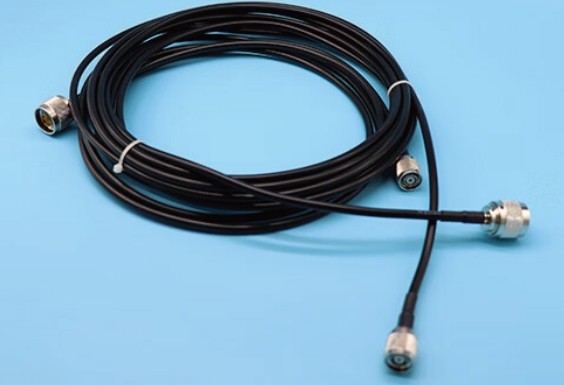
Ⅰ. Definition and calculation formula of RF cable attenuation value
The attenuation value of RF cables refers to the signal loss experienced by RF signals during transmission, usually expressed in decibels (dB). The calculation formula is:
Attenuation value (dB)=10 * log10 (input power/output power)
Among them, the input power is the power output by the signal source, and the output power is the power received by the receiving end. The smaller the attenuation value, the better the signal transmission quality.
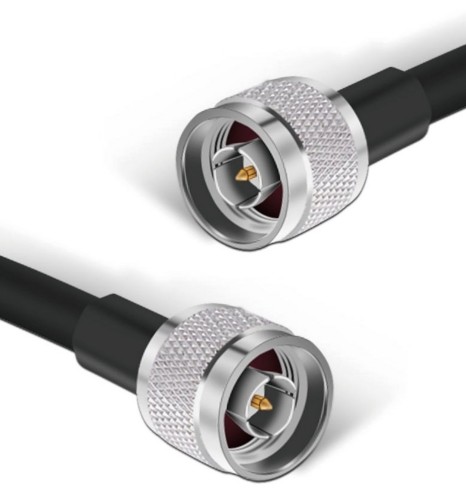
Ⅱ. The relationship between RF cable attenuation value and RF signal transmission distance
The attenuation value of RF cables is closely related to the transmission distance of RF signals. When the signal transmission distance is long, the attenuation value of the RF signal will increase, and the signal strength will decrease, thereby affecting the transmission quality of the signal. Therefore, in wireless communication, it is necessary to choose appropriate RF cables according to the actual situation to ensure the quality and distance of signal transmission.
The attenuation value of RF cables is also closely related to frequency. Signals from different frequency bands will experience varying degrees of attenuation during transmission, so it is necessary to choose the appropriate RF cable based on the frequency. Usually, high-frequency signals have shorter transmission distances and greater attenuation, so it is necessary to choose RF cables with lower attenuation. The signal transmission distance in the low-frequency range is relatively long, and the attenuation is also small, so RF cables with higher attenuation can be selected.
Ⅲ. Factors affecting the attenuation value of RF cables
The attenuation value of RF cables is influenced by various factors, mainly including cable length, wire diameter, material, joint quality, etc. The longer the cable length, the greater the attenuation value; The thicker the wire diameter, the smaller the attenuation value; The better the material, the smaller the attenuation value; The better the quality of the joint, the smaller the attenuation value.
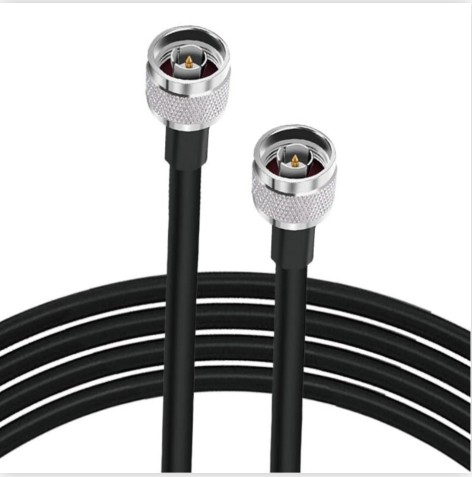
Ⅳ、 How to reduce the attenuation value of RF cables
To reduce the attenuation value of RF cables, the following methods can be used:
1. Choose high-quality RF cables and use low loss, low-noise cables.
2. Try to shorten the cable length as much as possible to avoid attenuation caused by excessively long cables.
3. Maintain the integrity of the cable and avoid attenuation caused by cable damage or aging.
4. Reasonably install connectors to ensure good quality, tight joints, and avoid losses caused by loose joints.
The attenuation value of RF cables is a very important indicator in wireless communication, which has a significant impact on signal transmission quality and distance. In practical applications, it is necessary to select appropriate RF cables according to the actual situation and take corresponding measures to reduce attenuation values to ensure the stability and reliability of wireless communication.