


Home / Solutions: Fixed Asset Management
Fixed Asset Management

Fixed Asset Management
Traditional fixed asset management suffers from inefficient barcode identification, disjointed data across finance, procurement and maintenance systems, incomplete lifecycle tracking, slow manual stocktaking and insufficient abnormal asset alerts.
This RFID solution binds unique RFID tags to each asset at entry, deploys fixed and handheld readers at key nodes to record asset movement. Built-in middleware connects existing business systems, dual verification rules standardize asset transfer and inventory workflows.
With modular hardware deployment and real-time abnormal alert notifications, the system achieves low-cost rollout, full-lifecycle asset supervision, cuts manual workload and lowers asset loss risks.
I. Pain Points of Fixed Asset Management
1.1 Low asset identification efficiency & poor real-time matching capability
Small and medium organizations rely on manual checking of asset information; large organizations mostly use traditional barcode recognition tools with high labor input and slow reading speed. It cannot synchronously bind asset data with user, department information, and batch reading of multiple assets during inventory is not supported.
1.2 Isolated independent business systems with data barriers
Fixed asset management, financial accounting, maintenance management and procurement systems operate separately. Asset data cannot be shared across platforms, which causes repeated manual entry and low overall operational efficiency.
1.3 Discontinuous full-process asset tracking
The asset lifecycle covers procurement, warehouse storage, cross-department transfer, on-site usage and scrapping. Traditional technologies cannot record asset status of each node, so it is difficult to find misplaced assets and conduct tracking for high-value asset risk control.
1.4 Difficult coordination of cross-department business flow
There is no unified data collection standard for asset management across different departments and branches. New intelligent systems will meet compatibility issues when connecting with existing ERP and financial systems.
1.5 Slow manual verification during inventory check & workflow congestion
Manual asset counting requires heavy workload and long working hours for internal teams. When asset information cannot be verified on-site quickly, auditing progress gets stuck and lowers daily operational efficiency.
1.6 Weak early warning capability for abnormal assets
Misplaced, damaged or idle assets cannot be automatically identified in daily operations, requiring extra manual inspection and bringing hidden risks including asset loss, repeated procurement and capital waste.
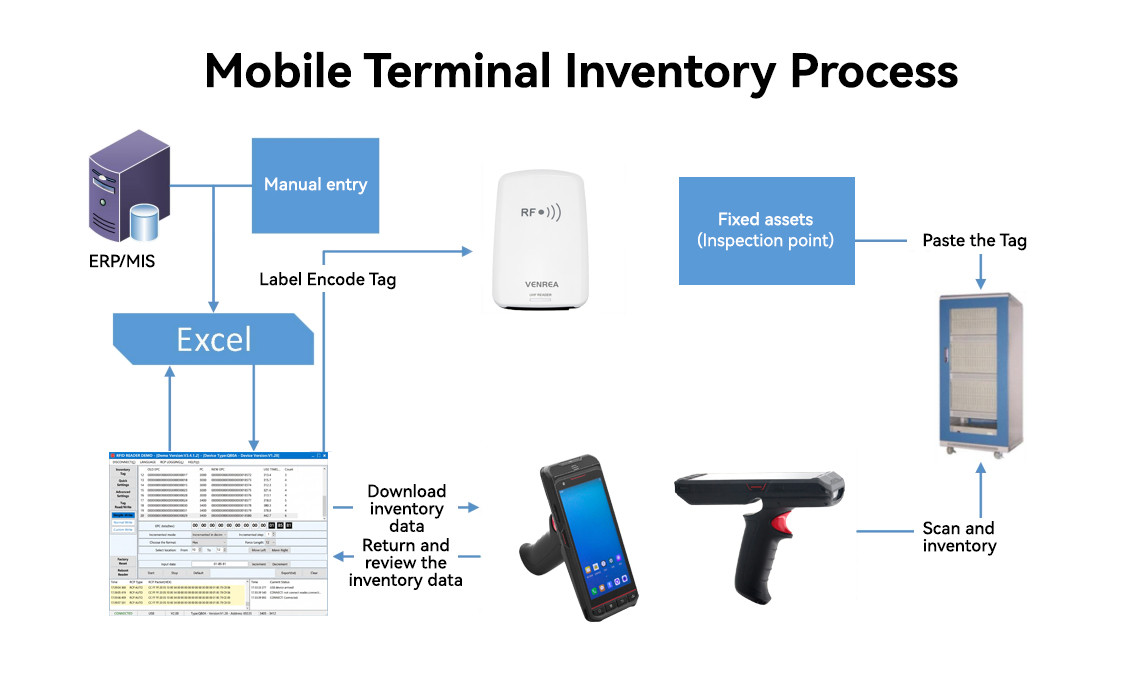
II. Solution Overview
2.1 One-to-one binding of assets and attribute data during tagging
Deploy RFID tag printers at asset receiving stations. While printing asset labels, the system writes asset specification, custodian and department data into passive RFID tags to complete data binding; all asset data is uploaded to backend platform synchronously to support full-lifecycle tracking.
2.2 Full-node RFID collection for continuous asset tracking
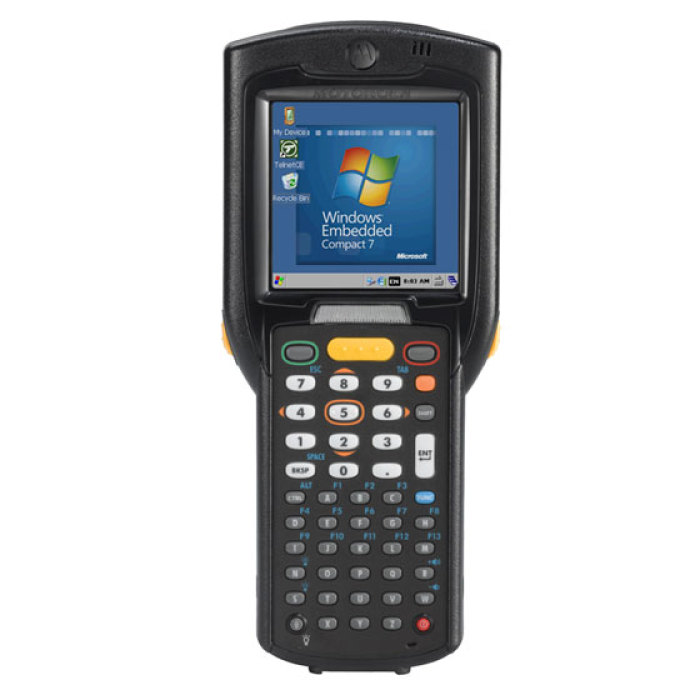
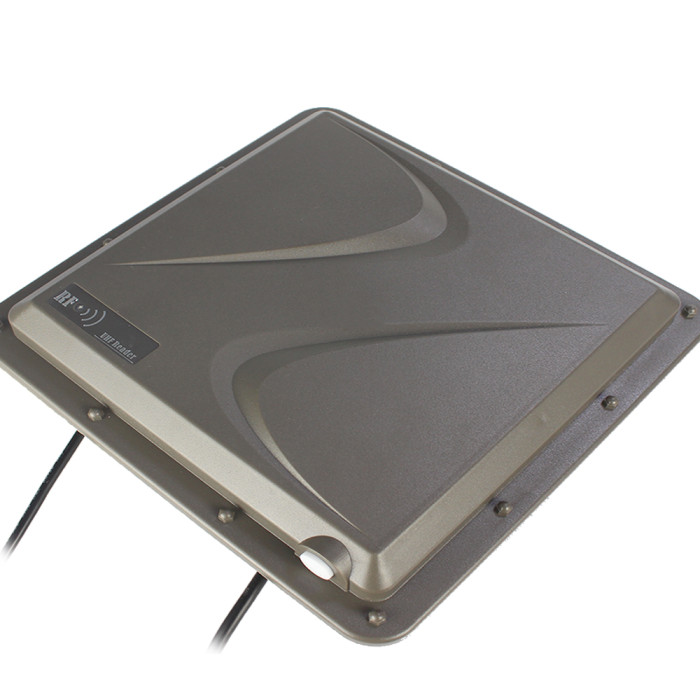
Install fixed RFID readers and antennas at warehouse gates, asset storage areas; equip management staff with handheld RFID collectors. All asset movement paths are recorded in real time to quickly locate missing assets and capture abnormal asset tags; abnormal assets will trigger audio-visual alerts and be routed for manual verification.
2.3 System middleware to break data isolation barriers
Custom middleware is provided to seamlessly connect the RFID platform with existing financial, procurement and maintenance systems. It realizes unified collection, transmission and sharing of asset data, removes duplicate data entry and improves overall operational efficiency.
2.4 Dual-verification asset check & transfer channel
Build verification processes combining RFID scanning and custodian confirmation. The system verifies asset tag information and user authorization twice; only matching data can finish asset transfer or stocktaking recording. For verification failures, staff can use handheld RFID devices to perform supplementary checking.
2.5 Low-cost, easy-to-deploy overall technical framework
The solution adopts reusable passive RFID tags; no large-scale reconstruction of existing storage racks and office facilities is needed, only modular RFID acquisition hardware is added. Partial or full deployment is available based on actual demands of different organizations, with great scalability.
2.6 Real-time information push and whole-process asset supervision
The backend sends real-time asset usage, inventory status to management personnel’s mobile devices. Abnormal assets trigger dual notifications for asset administrators and finance teams, forming closed-loop management from asset receiving to scrapping, effectively reducing asset loss and auditing risks.
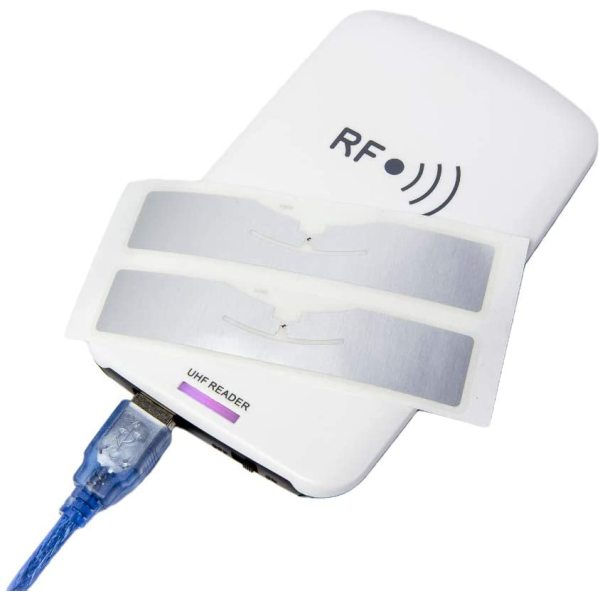
sample code to facilitate further development. Data Interface USB for power supply and read, write tags' information.
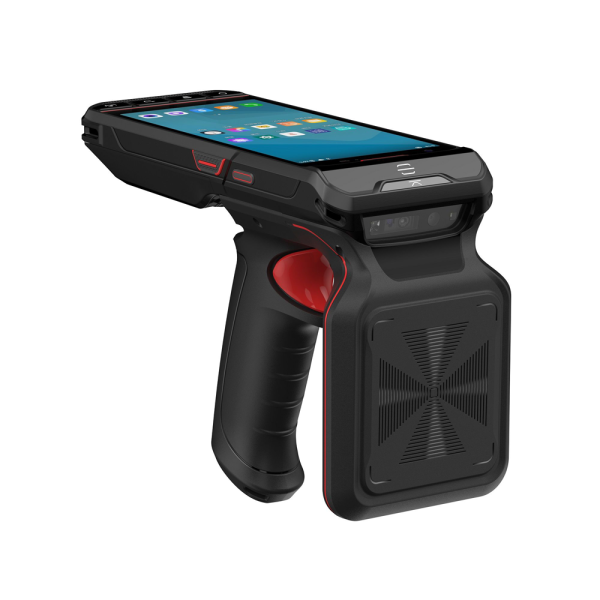
● Android 10 Mobile Computer
● 1D 2D &DPM Barcode Scanning,
● Long Range & High-speed UHF RFID Reading(Impinj E710 )
● Bluetooth, Camera, 10000mAh Battery with Patented Design
● Ultra Rugged, IP68 Sealing and 1.2m drop to concrete
● Used in Retail,Warehousing,Logistics,Inventory
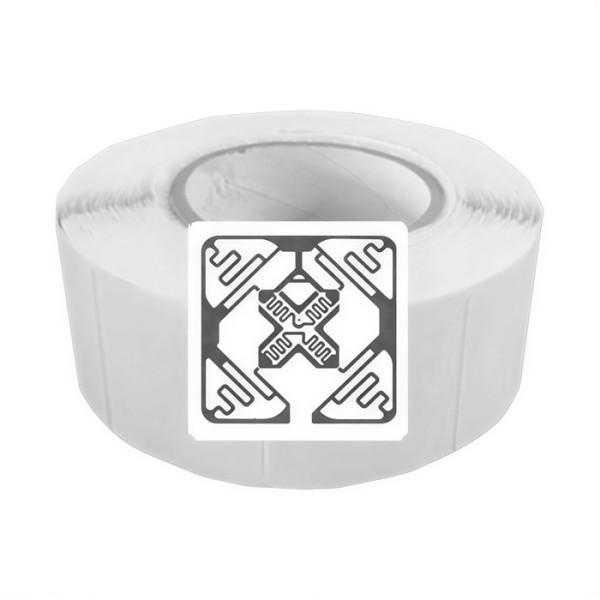
YANZEO UHF RFID Tags 50x50mm 15M Long Range ISO/IEC 180000-6C EPC Class1 Gen2 RFID Stickers for Commidity Management
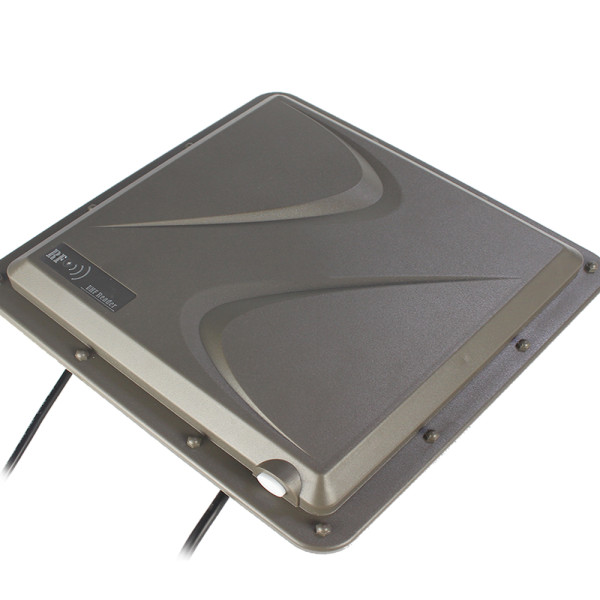
UHF RFID Reader| Yanzeo SR691| SR692| SR693 10M Long Distance WIFI RS232/RS485/Wiegand RJ45/USB Integrated Reader
Contact Person

- Full Name:
- Sunnee
- Tel:
+86 18927542630
+86 020-38201771
- Email:
- sales01@yanzeo.com
- WhatsApp:
- 8618927542630
- Address:
- 224# 126, East Ring Road, Zhucun, TianHe District, Guangzhou, Guangdong