Iot Card/Flow Card Series Special Topic: RFID Technology Popularization
Iot Card/Flow Card Series Special Topic: RFID Technology Popularization
RFID was first used in the military. During World War II, in order to identify returning planes and which ones were theirs, the British installed a radio transceiver on the plane. Every time the plane flew back, the British control console would send a signal to the plane, repeatedly asking whether it was Lao Li's plane. After receiving it, it would send back a signal, as if answering Lao Wang, "I am me." This way, they knew whether it was their own people. This was the scene when RFID just appeared. If something went wrong, it would be a big scene. It can be seen that the technology will have unlimited future prospects.
Nowadays, Walmart's RFID tags have been widely used in supermarkets. When we went to the supermarket to buy things before, there were only barcodes on them. A barcode can only correspond to the same product. For example, a bag of potato chips, no matter how long it lasts, as long as it is the same brand and the price of this bag of potato chips is the same, then their barcodes are the same. But RFID is different. Each tag can correspond to a unique ID, so that the supermarket can accurately manage each single product. In the past, barcodes were scanned, but now RFID tags can be sensed, which greatly improves work efficiency. But RFID tags can read and write the same batch of goods many times, and the next batch of goods can be used after they are sold, so it is very cost-saving.
In addition to being used more in supermarkets, it is also used more in bookstores, which is easy to understand. In similar places, there is another industry that also uses it very much. Everyone in the logistics industry must know that when we buy things now, basically we can know when the goods are shipped, where the goods are delivered, and when they arrive at our homes. This is all based on RFID tags. When it comes to a link, we can re-read and write the tag information and scan it. In this way, every link and process of our logistics becomes controllable. Doesn’t it feel very magical? So it is said that science and technology will make the country prosperous.
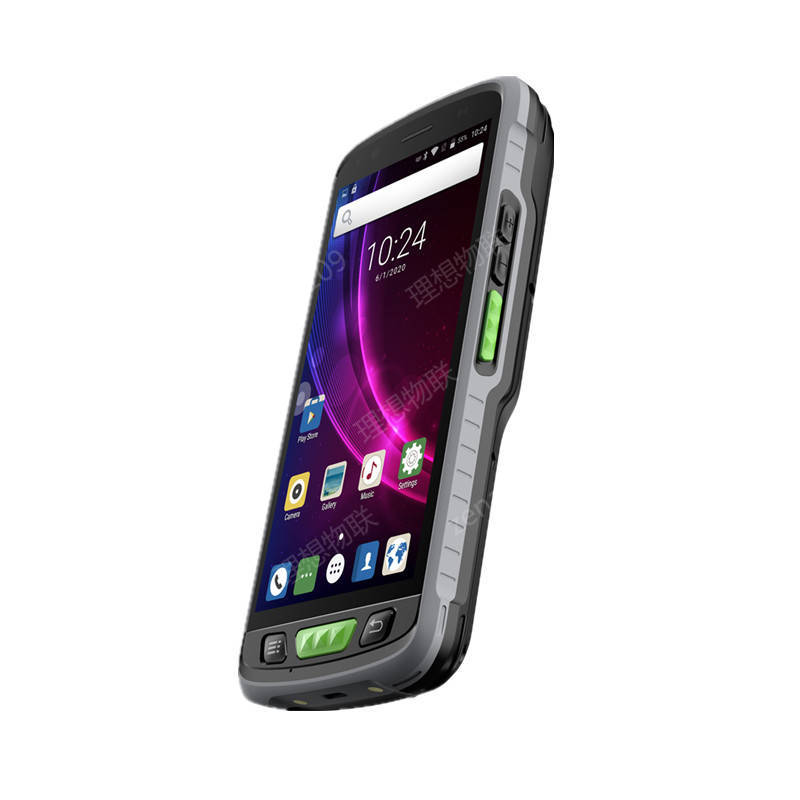
Some people say that if a lot of goods are put together, will it be wrong if they don’t rely on scanning but on induction? Of course it won’t be good, and the non-reading and writing distance can be long or short. The shortest is a few centimeters, and the longest can reach tens of meters. For example, the distance of the door key of the community is a few centimeters. You can open the back door with the key. In the supermarket, it is generally about 25 to 30 centimeters. Look at the cashier counter in the supermarket. There is a layer of glass on the counter below, and the sensor device is placed below. The glass is similar to the sensor device. It is 25 cm away. You can sense it by putting things on the glass. Some people ask if this thing is safe? The answer is safe, because the safety factor of RFID is still very high, and the data content is difficult to be tampered with.
The main reason why RFID can be widely used is that it is cheap. Price is always a very important criterion for determining whether it can be used more. In the early 21st century, the unit price of the RFID chip was still calculated in US dollars. Now an RFID chip may be a few cents or even cheaper. It is really getting cheaper. When Jack Ma was doing unmanned supermarkets, the RFID tag technology should be regarded as a very core pillar of his unmanned supermarkets.
In the future, with the development of the Internet of Things, RFID technology, as a very important section, will continue to have new developments. Even when the era of implanting chips in the body really comes one day, RFID will definitely be involved. The future may be very close.