RFID knowledge Customers often Ask ( RFID reader writer Section 1)
1. What is an RFID reader/writer?
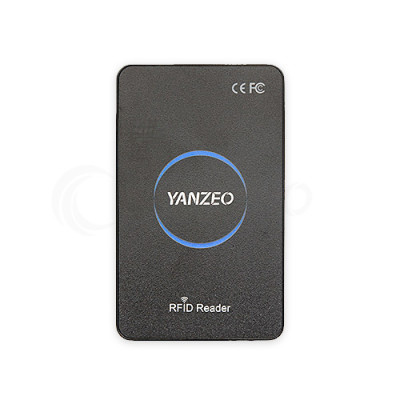
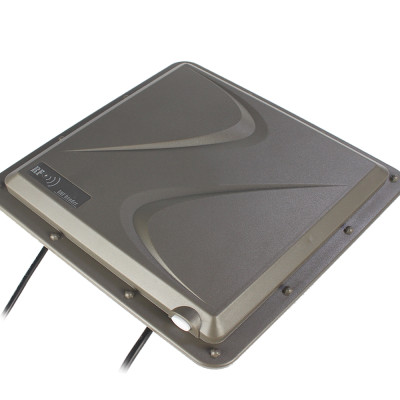
The RFID reader (reader writer)
communicates wirelessly with RFID electronic tags through an antenna, enabling
the reading or writing of tag identification codes and memory data. A typical
reader includes a high-frequency module (transmitter and receiver), a control
unit, and a reader antenna.
2. What do the high frequency, low frequency, and ultra-high frequency of the reader/writer represent?
Just like the radio we listen to, RF tags and readers also need to be modulated to the same frequency to work. LF, HF, and UHF correspond to carrier frequencies of different frequencies.
3. How can RFID readers read multiple tags simultaneously?
In order to achieve simultaneous reading of multiple labels, communication companies adopt collision prevention technology. The commonly used algorithms include pure ALOHA algorithm, slot ALOHA algorithm, dynamic slot ALOHA algorithm, and binary search algorithm.
4. What are the factors that affect the receiving range of the reader?
The receiving range of a reader is influenced by many factors, such as radio frequency, label size and shape, reader energy, interference from metal objects, and other RF devices.
5. What are the communication interfaces and power supply methods for reader/writer standards?
Readers generally have RS232, RS485, RJ45, Wigan, USB, 3/4G, and HDMI communication protocols, and different models have different communication interfaces. Please follow the requirements and choose the product model. The power supply method is DC9~24V/3A, and the standard power adapter is DC9V/3A.
6. Language support for reader and writer development?
Fixed and integrated readers support C++, C #, and Java development languages, while Android handheld devices support Java development language.
7.Can all readers support different types of tags?
Not yet. Many companies produce readers that support RF technology for new tags used in existing supply chains. Some readers only support new electronic product codes, while others only support specific labels produced by certain manufacturers.
8. What are the main working modes of ultra-high frequency readers and writers?
Command mode: Working in this mode, the reader/writer only works after receiving a valid control command through the RS232 or RJ45 port, and returns the command execution result through the original port.
Active mode (Auto): The reader actively reads the label information and notifies the upper computer according to the requirements.
Active mode: continuous and triggered.
Continuous mode: The reader actively reads the label every pause time of Reader.
Trigger method: When the trigger level at the interface end (trigger 1 or trigger 2) is at high (or low) level, the reader actively reads the tag every pause time of the reader.
9. What factors will affect the reading distance of ultra-high frequency readers and writers?
The factors that affect the distance between RFID readers and writers mainly include reader performance, antenna gain, label size and angle, environmental factors, and different frequency bands.