Which is better, RFID badges or facial recognition for attendance?
A comparison and selection guide of 5 campus attendance methods
The selection of campus attendance systems is not about "which technology is more advanced", but about "what problems need to be solved".
To address issues such as school gate attendance during peak hours, class rotation check-ins, and dormitory check-ins: RFID school badges should be given priority. Students can be automatically identified as long as they wear and pass through normally, without queuing or stopping.
To solve the problem of "confirming if it's the right person" (such as identity verification in examination rooms and access control in key areas): facial recognition is more suitable because it verifies the person.
For small-scale schools, those already have campus cards, and have limited budgets: the cost of card swiping or QR code solutions is lower.
The two are not mutually exclusive: many schools adopt a combination of "batch passage through school gates with school badges + face verification at examination rooms", each using their strengths.

1. A Quick Overview of Five Common Campus Attendance Methods
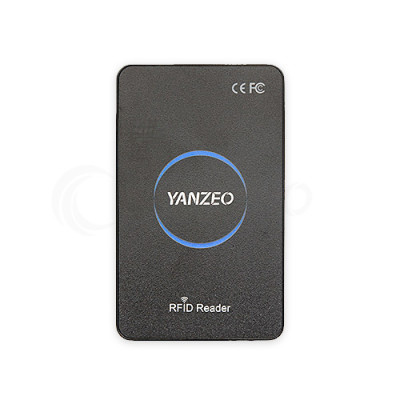
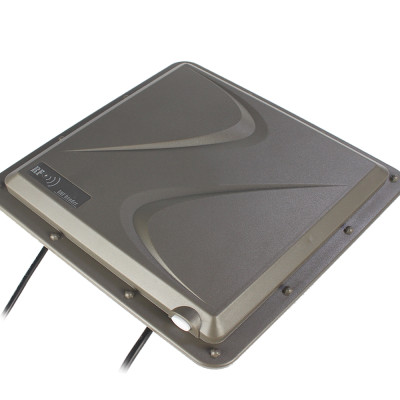
1.1 RFID Logo (UHF Passive / 2.4G Active)
The RFID chip and antenna are encapsulated in the logo. Each logo has a globally unique ID and is linked to the student's identity.
How to use: Students can simply wear it. It will be automatically recognized when passing through the passage gate or the coverage area of the reader/writer.
Advantages: No operation required, supports batch reading of multiple tags, does not involve biometric feature collection.
Limitations: It recognizes the "logo" rather than the face. It needs to be combined with anti-tampering design and abnormal rule management.
Suitable for: School gate attendance, class rotation sign-in, dormitory return and dormitory check-in, electronic fence.
1.2 Face Recognition
It collects facial features through the camera for identity comparison.
How to use it: Students need to face the device and stay for identification.
Advantages: Verifies "the person himself/herself", difficult for others to impersonate, suitable for examination hall verification.
Limitations: During peak hours, vehicles need to stop one by one to pass; affected by light, hats, masks, height differences, and weather conditions such as rain and snow; biometric features are sensitive personal information, collection must follow the principles of informed consent and minimum necessity.
Suitable for: Identity verification in examination venues, dormitory access control, and small-scale entrances and exits.
1.3 Fingerprint Recognition
How to use: Press your finger for collection.
Advantages: Low equipment cost, mature technology.
Limitations: Contact-based usage, prominent issues of hygiene and wear; Young students have shallow fingerprints and fluctuating recognition rates; Also involves compliance requirements for biological characteristics; Queueing is obvious during peak hours.
Suitable for: Small training institutions or single-point access control; Has been less adopted in large-scale campus attendance systems.
1.4 IC / CPU Campus Card Swipe
How to use: Place the card face-up near the reader.
Advantages: Can be used for consumption with the One Card System and book borrowing with the same card.
Limitations: Requires active operation, with risks of forgetting to bring, losing, or having someone else swipe; prone to queueing during peak hours; unable to support location-based positioning and seamless dormitory return.
Suitable for: Schools with limited budgets and mainly using the One Card System for consumption.
1.5 QR Code / Mobile Check-in
How to use: Show the dynamic QR code or use the mobile device for check-in.
Advantages: No need for additional hardware.
Limitations: Dependent on students carrying their mobile phones, usually limited in primary and secondary school scenarios; the process takes the longest time; difficult to control proxy check-in.
Suitable for: Lightweight scenarios such as elective courses in universities and off-campus internship sign-ins.
2. Five key dimensions compared horizontally
2.1 Efficiency of passage and peak load capacity
The RFID school emblem supports batch reading of multiple tags. When students pass through the school gate in groups, they do not need to stop one by one. During the peak hours of going to and coming from school, there is no need to queue; face recognition, card swiping, and QR codes are essentially "one-by-one passage". The more people there are, the longer the passage time. For schools with over a thousand students, this factor often becomes a decisive one.
2.2 Student cooperation and non-intrusiveness
The RFID school emblem does not require students to make any additional actions. The biggest attendance loophole, "forgetting to sign in", has been eliminated from the process. Face recognition, card swiping, and QR codes all have the potential for cooperation costs and omissions.
2.3 Privacy compliance
Face recognition and fingerprints belong to biometric information. Collection and use must follow principles such as informed consent and minimum necessity. Schools usually also face communication costs with parents. The RFID school emblem identifies an item's ID and does not involve biometric collection. Low-age students and transfer students can use it directly.
2.4 Environmental adaptability
Face recognition can be affected in strong light, backlight, at night, in rainy or snowy weather, and when wearing a hat or mask. The installation height of the equipment also needs to take into account the height difference of students. The reading effect of the RFID school emblem is mainly related to the power of the reader, the direction of the antenna, and the wearing position. There will be certain attenuation near metals and water bodies. The placement can be adjusted through on-site testing to stabilize it.
2.5 Cost and long-term maintenance
The UHF passive school emblem does not contain a battery and is powered by the radio frequency field of the reader. It does not require charging or maintenance. The 2.4G active school emblem has a built-in battery and uses an ultra-low power design, with a longer service life. If the school emblem is damaged, it can be reissued, and the label ID can be re-bound.
The unit price of the face recognition equipment is higher than that of the network and computing power requirements. Later algorithms and equipment maintenance also require continuous investment.
Selection type judgment: For "mass production, seamless operation, and location tracking", choose RFID school badges; for "identity verification and prevention of impersonation", choose facial recognition; the combination of the two is the practical choice for most large-scale schools.
3. Selection suggestions for different types of schools
Primary and junior high schools
Prefer RFID school logo. Due to the young age of students and limited cooperation, non-contact attendance avoids peak congestion and also reduces the communication cost for parents regarding biometric feature collection;
General high schools / complete middle schools
RFID school logo is used for school gate attendance + classroom shift check-in. The dual-frequency design can simultaneously cover "precise entry and exit" and "area positioning";
Colleges and universities
The school logo or campus card is used for process recording (attendance rate, dormitory return), and facial recognition is used for personal verification in examination rooms and key laboratories;
Boarding schools
School logo + dormitory building and floor distribution, dormitory return statistics are automatically generated, replacing manual room inspections.